Mattress materials, certifications, and practical evaluation
How to Assess an Organic Cotton Sleep Surface
“Organic cotton” sounds like a simple promise. On a mattress, though, it may describe only the fabric touching your sheets—or it may be one part of a much larger materials story. To understand what you’re actually considering, look beyond the label and examine where the cotton appears, what sits beneath it, how the layers are assembled, and what the certification documents cover.
Choosing a mattress can feel like a high-stakes exercise in decoding reassuring words. Natural. Clean. Responsible. Organic. They can all sound like shorthand for a better night’s sleep, but none of them tells the whole story on its own. A mattress is a layered product, and its comfort, durability, and material profile depend on how those layers work together.
Organic cotton may be used for a mattress cover, a stretch-knit casing around a topper, or a component of interior padding. Those are different roles. A cover can affect the feel of the sleep surface and its ability to handle moisture. Cotton batting can add a modest amount of cushioning. Neither detail, by itself, reveals what the mattress core is made from or how the full product performs.
The best way to compare an organic cotton mattress—or a topper marketed with organic cotton—is to ask specific, grounded questions. Which component is certified? What materials are in the other layers? How is the product constructed? What care does it require? And, just as importantly, does its feel match your sleep preferences? A little careful reading can turn a vague eco-friendly pitch into a useful, practical assessment.
Start by locating the cotton
First, find out exactly where organic cotton is used. Product descriptions often place the material front and center, while leaving its location unclear. Is it the outer ticking—the fabric covering the mattress? Is it a casing around a separate comfort layer? Is cotton used as fill, blended with another fiber, or included in a small portion of the construction?
These distinctions matter because a mattress may contain many materials. A cotton cover could sit above latex, foam, wool, a spring unit, or several layers in combination. A cotton topper cover, meanwhile, might encase latex without indicating that the latex itself is organic. The material named in a headline does not automatically describe the whole product.
Look for a layer-by-layer specification, sometimes called a materials list, construction breakdown, or bill of materials. Ideally, it identifies the cover fabric, the fill or comfort layers, the support core, adhesives or fire barriers when applicable, and any relevant blends. If the description says “organic cotton mattress” but provides no explanation of what is organic, treat that as an invitation to investigate—not as proof that every component carries the same status.
It can help to sketch the mattress as a simple stack: cover, comfort layer, transition layer, support core, and base or border. Not every design has each of these layers, and product makers may use different names, but the exercise makes omissions easier to spot. A clear specification should help you understand the major components and their order, rather than asking you to infer the construction from marketing language.
Understand what a certification does—and doesn’t—say
Certifications can make material claims easier to verify, but they are not interchangeable, and they do not all cover the same things. Some assess the organic status of fibers or the processing and handling of textiles. Others focus on chemical emissions or a particular material category. The key question is not simply, “Is it certified?” It is, “Which component is covered, under which standard, and can I verify the claim?”
For textile products, Global Organic Textile Standard (GOTS) is one certification name consumers may encounter. Its criteria address organic fibers and aspects of textile processing, with requirements that depend on the certification scope and product category. The presence of the word “GOTS” in advertising is not, on its own, enough to establish that an entire mattress is certified. Check whether the claim applies to the fabric, a component, a finished product, or a supply-chain operation, and look for supporting details such as a certificate, scope, or license information.
The Organic Content Standard (OCS) is another certification that may appear in textile supply chains. It focuses on verifying the presence and amount of organically grown material in a product through chain-of-custody documentation. It does not, by itself, establish every environmental or social characteristic a shopper might associate with the word “sustainable.” As with any label, read the standard’s scope rather than filling in the blanks with assumptions.
For mattress materials beyond cotton, other standards may be relevant. A latex certification, for example, concerns latex rather than cotton fabric. A certification for low chemical emissions addresses a different question from organic fiber content. Neither should be treated as a substitute for the other. A product can have one verified attribute without having every attribute a shopper hopes to find.
When checking a certification, note the certificate holder, product or facility named, issue or validity dates where available, and the exact scope. If the retailer lists a certification but does not identify what it covers, ask for clarification. A trustworthy answer should be specific and proportionate—not a sweeping claim that a single badge makes the entire sleep surface “chemical-free,” universally safe, or environmentally perfect.
Read the construction, not just the fiber name
Materials perform differently depending on how they are arranged and attached. Organic cotton in a tightly woven cover may feel different from cotton in a stretch-knit casing. Quilting can add texture and modest loft. A thin cotton layer may contribute less cushioning than a substantial latex or fiber comfort layer. These are construction questions as much as material questions.
Ask how thick each comfort layer is, whether it is quilted or loose, and whether it is designed to be removable. Find out how the cover is secured and whether the product includes a separate protector or topper. A removable cover can make care more straightforward, but it may not be washable; a zippered design is not a promise that it can go into a washing machine. Always consult the manufacturer’s care instructions.
Construction can also influence how the surface responds to movement and pressure. A stretch-knit cotton cover may follow the contours of a flexible layer beneath it. A firmer woven fabric may feel more structured. Quilting may soften the initial hand feel while also changing how closely a sleeper feels the support layer below. These observations are useful, but they cannot replace trying a mattress when possible, especially for people with particular comfort needs.
Check the seams, tufting, quilting pattern, and edge finish if product documentation or an in-person inspection makes those details available. These features can help hold layers in position, though appearance alone does not predict long-term durability. Ask whether the manufacturer provides repair guidance, what the warranty covers, and how normal settling or wear is defined.
Separate material claims from comfort claims
Organic status does not tell you whether a mattress will feel soft, firm, buoyant, or pressure-relieving. Those sensations come from the full design: layer materials, thickness, density or spring tension, quilting, and how the mattress works with the sleeper’s body and bed base. A cotton cover can be part of many different comfort profiles.
Think about your usual sleeping position, how much cushioning feels comfortable around your shoulders and hips, and whether you share the bed with someone whose preferences differ. Side sleepers often pay close attention to pressure at the shoulder and hip; back and stomach sleepers may prioritize a more supportive, less yielding feel. These are starting points, not rules. Body shape, mobility, temperature preferences, and personal comfort all influence what feels right.
Also consider the entire sleep setup. A thick mattress protector, fitted sheet, or topper can change how the surface feels and how air moves around the body. If you already own a mattress that feels too firm, a topper may change the immediate surface comfort, but it will not necessarily correct an underlying support mismatch or a worn-out core. Test additions as part of the complete bed rather than judging each material in isolation.
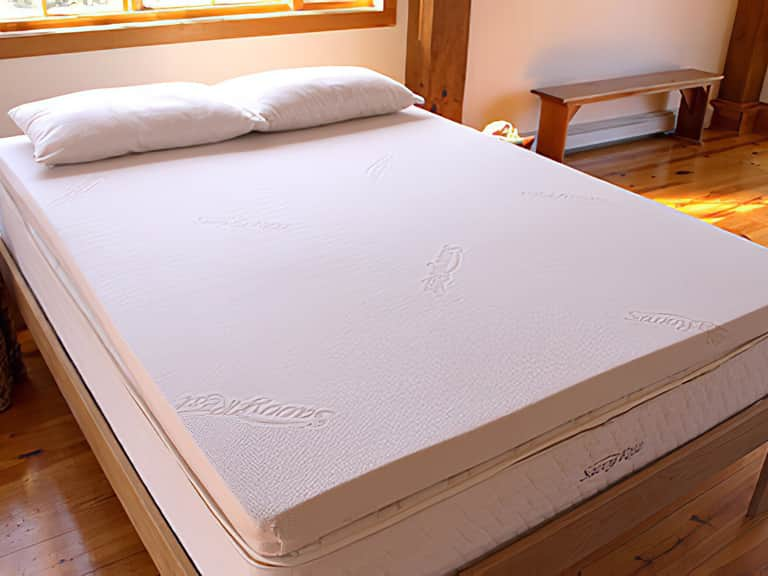
For example, the Savvy Rest Vitality Latex Mattress Topper is described as a three-inch natural Talalay latex layer in a certified organic cotton stretch-knit casing. That description is useful because it identifies the cotton’s role as a cover around latex, rather than implying that cotton is the topper’s entire construction. Shoppers should still verify the specific certification documentation, review the care and warranty terms, and decide whether a soft latex topper suits their mattress and comfort preferences.
Think about breathability and temperature in context
Cotton is commonly valued for its familiar feel and ability to absorb moisture, but the temperature experience of a mattress depends on more than the fiber in its cover. The weave, thickness, quilting, finishes, and layers beneath the fabric all play a part. So do room temperature, bedding, sleepwear, humidity, and individual differences in how people experience warmth.
A breathable-feeling cover cannot guarantee that a whole mattress will sleep cool. A dense comfort layer, a waterproof barrier, or a tightly fitted protector may affect the way heat and moisture move through the bed. Conversely, a particular sleeper may find a surface comfortable even when it does not make a dramatic cooling claim. Treat temperature language as a prompt to inspect the complete construction and, when possible, test the product in your own sleep environment.
If temperature is a priority, ask what the cover is made of, whether it has a membrane or finish, and which materials sit directly below it. Look for clear explanations rather than claims that rely on a single fiber to promise a precise overnight result. No fabric can account for every bedroom or every sleeper.
Examine care, hygiene, and expected maintenance
Care instructions are part of the product’s practical value. A mattress cover may be spot-clean only, while a separate mattress pad may be machine washable. A topper may require airing or careful surface cleaning. Those are not minor details: they affect how easy it is to maintain the sleep surface over time, especially in a household with children, pets, allergies, or frequent spills.
Do not assume that cotton means machine washable, or that an organic material needs no protection. Check the official care label and ask whether cleaning could affect the warranty. If the cover is not removable, consider whether a compatible protector is recommended and whether it could change the feel or airflow. Keep care instructions accessible so that a quick cleanup does not become an avoidable maintenance problem.
Claims about allergy resistance deserve similar care. A fiber’s origin does not make a finished mattress automatically hypoallergenic, and “natural” is not a universal medical assurance. If you have a diagnosed allergy or a particular sensitivity, consult a qualified health professional about relevant materials and exposure concerns, then request precise product information from the manufacturer.
Evaluate environmental language with a clear eye
Organic cotton can be one meaningful part of a materials decision, but sustainability is broader than a single ingredient. Farming practices, processing, transportation, product lifespan, repair options, packaging, and end-of-life handling all contribute to a product’s overall impact. A label rarely captures every one of those factors.
Be alert to broad phrases such as “eco-friendly,” “green,” or “chemical-free” when they appear without definitions or supporting evidence. Ask what the claim specifically means and whether it applies to the fiber, the finished textile, the full mattress, or the brand’s operations. A precise, limited statement is often more informative than a sweeping promise.
Longevity matters, too. A well-made mattress that remains comfortable and functional for years may avoid an early replacement, but projected lifespan is not something a materials list can guarantee. Review the warranty, understand its exclusions, and look for practical details about flipping or rotating the mattress, foundation requirements, and signs of normal wear. A warranty is a contract, not a promise that the product will feel unchanged indefinitely.
A quick comparison checklist
When two products use similar organic cotton language, compare them on the details that make the claim meaningful and the mattress workable for you:
- Location: Is the cotton in the cover, casing, quilting, fill, or more than one component?
- Composition: Are the fiber content, blends, and major interior layers clearly listed?
- Certification: Which standard applies, what component is covered, and can the documentation be checked?
- Construction: How are the layers arranged, attached, quilted, or enclosed?
- Comfort: Does the full design match your preferred firmness, sleeping position, and pressure needs?
- Temperature: What are the cover, barrier, and underlying layers made of, and how might they affect the whole surface?
- Care: Can the cover be removed? What cleaning methods are permitted?
- Protection: Is a protector recommended, and could it alter the feel or warranty coverage?
- Durability: What do the warranty, maintenance guidance, and product specifications actually promise?
- Transparency: Does the seller answer questions about materials and certification with verifiable, specific information?
Keeping notes in this format can make comparison less overwhelming. It also helps prevent a familiar trap: choosing the product with the most reassuring wording instead of the one whose construction, comfort, and documentation best fit your priorities.
Questions worth asking before you decide
If a listing leaves important gaps, contact the manufacturer or retailer. Useful questions include: “Which components contain organic cotton?” “Can you provide the certification scope or a current certificate?” “What materials are directly beneath the cover?” “Is the cover removable, and how should it be cleaned?” “Does the mattress require a particular type of foundation?” “What does the warranty exclude?”
The quality of the response matters. A helpful answer should distinguish between the cover and the core, identify the relevant certification rather than vaguely invoking one, and avoid guarantees about comfort or health that the available information cannot support. If the details remain unclear after asking, that uncertainty is itself relevant to your decision.
The bottom line: follow the layers
An organic cotton sleep surface is not defined by one appealing phrase. The cotton’s location, the other materials in the construction, the way the layers are assembled, and the scope of any certification all matter. So do the less glamorous details: fit, feel, maintenance, warranty terms, and whether the mattress suits the person sleeping on it.
Start with the specification, verify what the certification covers, and assess comfort separately from sourcing claims. That approach keeps the decision grounded without dismissing the value of organic materials. It also makes room for the most important point: a responsible label can inform your choice, but only a clear understanding of the whole sleep surface can tell you what you’re actually bringing home.